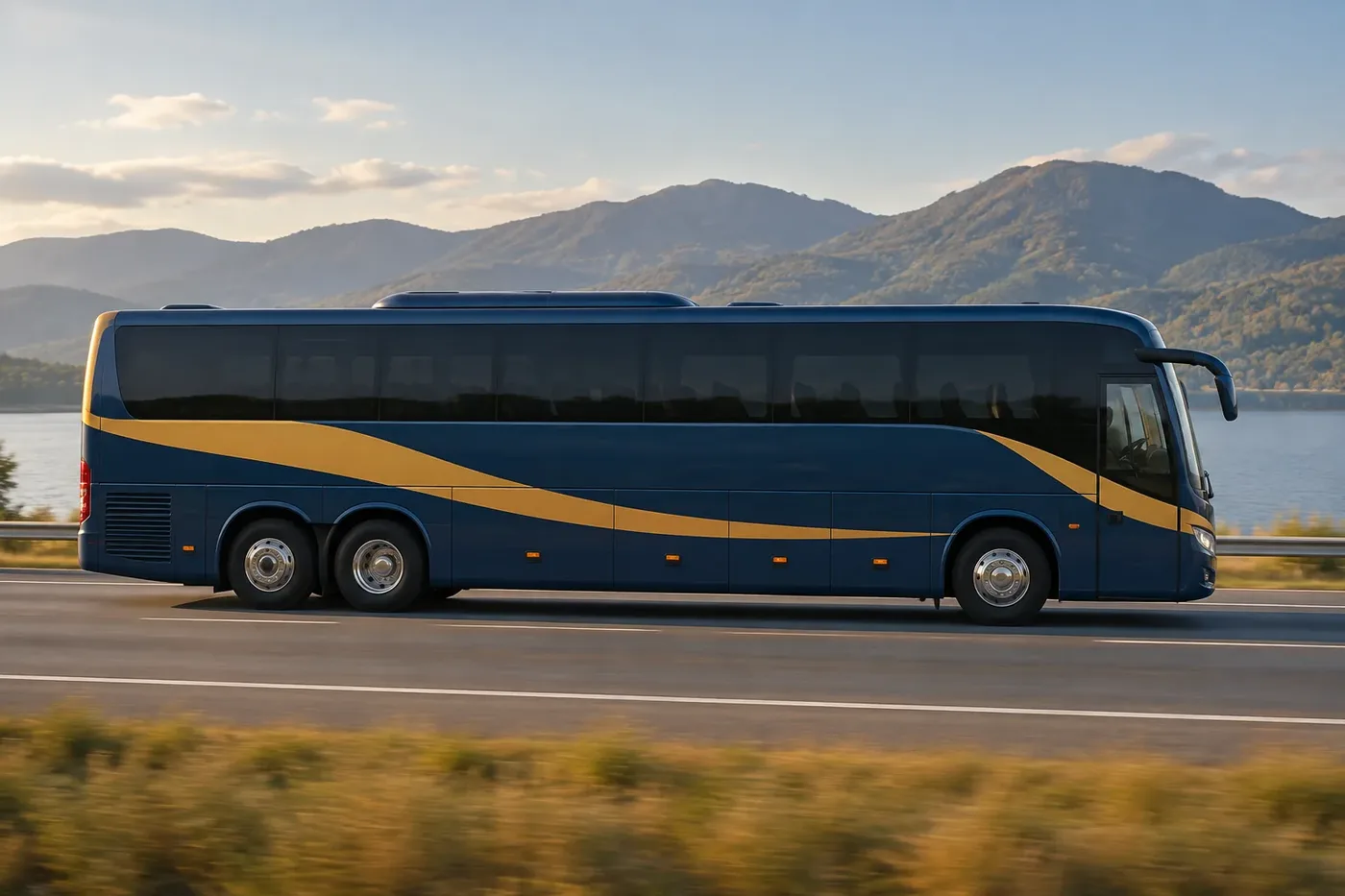
Wisconsin Passenger CDL Practice Test
This is a free 20-question practice test for the Passenger portion of the Wisconsin Commercial Driver's License knowledge exam. Questions are pulled from a pool of 58 drawn from the AAMVA CDL Manual, which is the source document the Wisconsin Division of Motor Vehicles uses to write its actual exam.
How it works: Click an answer. The correct choice highlights in green, and you'll see a short explanation. Aim for 85% or better before you sit for the real test in Wisconsin.
Question 1 of 20
Which of the following is part of the bus pre-trip inspection?
Correct. Bus inspection includes all standard items plus passenger-area items: seats, emergency exits, signaling devices, kneeling/lift equipment, fire extinguisher.
Question 2 of 20
A "passenger vehicle" requiring a P endorsement is generally:
Correct. The P endorsement is required for any commercial motor vehicle designed to carry 16 or more passengers including the driver.
Question 3 of 20
Driving a bus on slick roads requires:
Correct. Reduce speed, increase following distance, and treat all inputs as if a passenger is standing — they may be.
Question 4 of 20
If a bus is involved in a crash and remains driveable:
Correct. Move only if needed for safety. Render aid, secure scene with warning devices, notify authorities and dispatch.
Question 5 of 20
Brake retarders or "Jake" brakes on a bus:
Correct. Engine brakes / retarders help slow the rig on downgrades. Some areas regulate noise from compression brakes.
Question 6 of 20
Where must hazardous materials that are allowed on a bus be carried?
Correct. When allowed at all, the small quantities of hazmat permitted on buses must be in the baggage compartment, separated from passengers.
Question 7 of 20
When stopping at a railroad crossing, the bus must stop:
Correct. Stop 15 to 50 feet from the nearest rail. Look both ways and listen before proceeding.
Question 8 of 20
Looking out for passengers boarding through the front door:
Correct. Use the kneeling mechanism, lift, or ramp as needed. Allow time for safe boarding.
Question 9 of 20
A passenger bus driver who must operate over the bridge or in the tunnel:
Correct. Verify posted weight, height, and routing restrictions. Bus routes may require pre-planning to avoid prohibited corridors.
Question 10 of 20
When a bus has standees, the driver should:
Correct. Standees can fall in any sudden movement. Drive smoothly to keep them safe.
Question 11 of 20
Stops requiring extra caution:
Correct. Anywhere with pedestrians, reduced visibility, or reduced control demands extra attention.
Question 12 of 20
When backing a bus, you should:
Correct. Sound the horn before backing. Use a helper to guide whenever possible — bus blind spots are large.
Question 13 of 20
A bus driver must never:
Correct. You should always enforce the standee line and prohibit standing or sitting in stairwells where they could be ejected in an emergency stop.
Question 14 of 20
Carry-on baggage on a bus may be:
Correct. Carry-on must not block the aisle, the emergency exit, or the doorway. Use overhead racks or under-seat space.
Question 15 of 20
When approaching a school bus on the same side of the road with red lights flashing:
Correct. Drivers (including bus drivers) approaching a school bus loading or unloading children must stop until red lights are off and the bus moves.
Question 16 of 20
After every trip, the bus driver should:
Correct. Always do a post-trip walkthrough — check every seat for sleeping passengers, lost items, and damage. Many news-worthy incidents involve passengers left aboard.
Question 17 of 20
Bus emergency exits must be:
Correct. Emergency exits must be operable, clearly identified, and never blocked by cargo or passengers.
Question 18 of 20
A bus driver who is convicted of using the bus to commit a felony or driving under the influence with passengers aboard faces:
Correct. Federal rule: certain offenses (using the CMV in a felony, DUI with passengers) bring extended or permanent disqualification.
Question 19 of 20
You discover an emergency exit that does not function. You should:
Correct. A non-functional emergency exit puts passengers at risk. The bus is out of service until repaired.
Question 20 of 20
When approaching a drawbridge, a bus must:
Correct. Stop at least 50 feet before any drawbridge. The exception is if there is a traffic-signal light or an attendant directing traffic, or the bridge has been closed and locked.
About the Wisconsin Passenger exam
Most states administer 20 Passenger questions and require 80% to pass. The exam covers passenger safety, vehicle inspection, loading and unloading, prohibited cargo, emergency exits, and conduct expected of a passenger-vehicle operator. A separate skills test in a representative passenger vehicle is also required.
The Wisconsin Division of Motor Vehicles follows the federal CDL standards established by FMCSA. To earn the Passenger credential, you must answer at least 80% of the questions correctly. Many candidates score lower the first time because the test pulls from a large pool — refreshing this page will give you a different mix of questions, drawn from the same authoritative source.
Want more practice? Try the full Passenger question bank or browse all Wisconsin CDL practice tests.