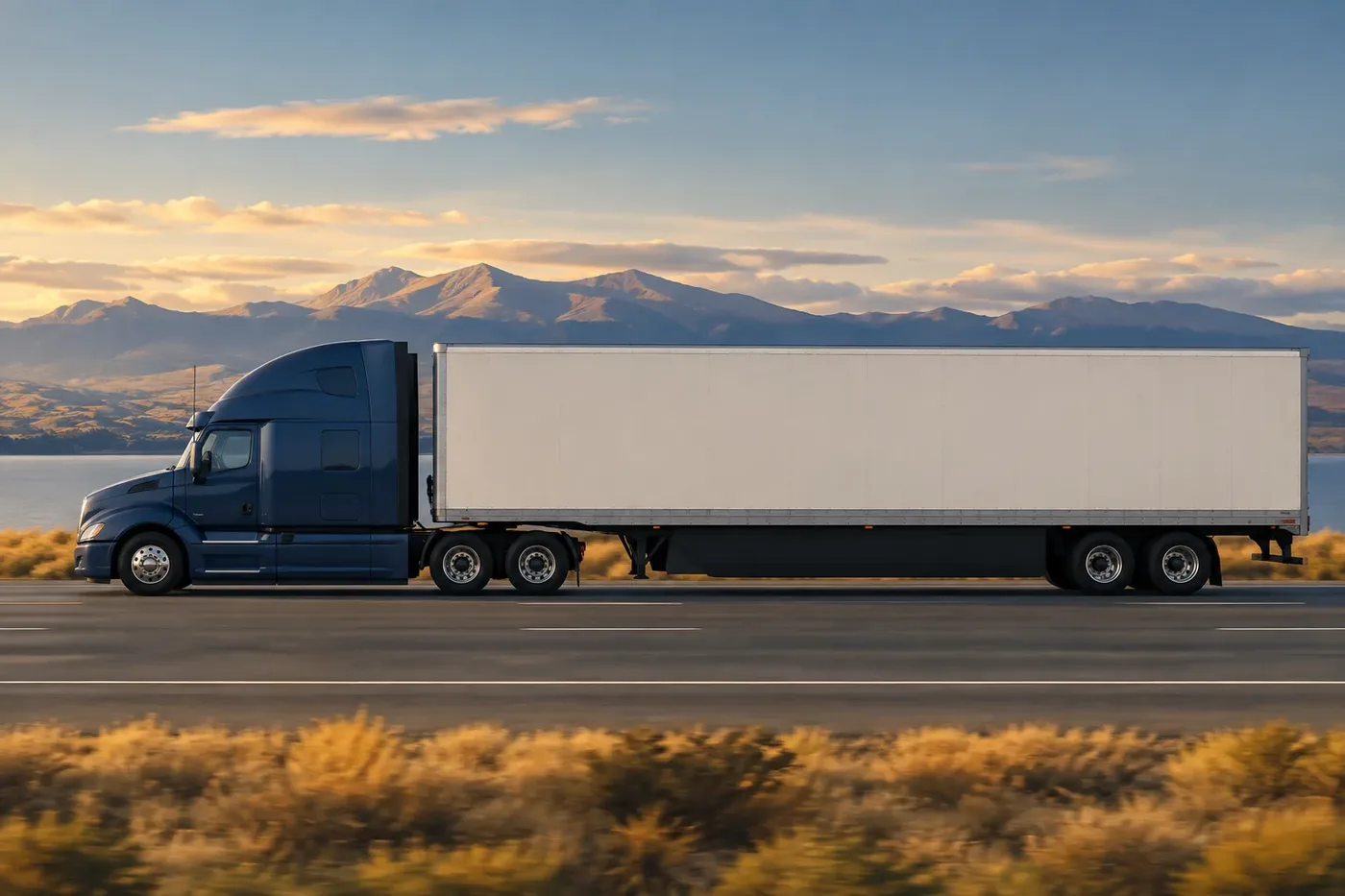
Combination Vehicles CDL Practice Test
The Combination Vehicles test is required to obtain a Class A CDL — the license needed to legally drive a tractor-trailer or any combination where the towed unit weighs over 10,000 lbs. It covers coupling and uncoupling, off-tracking, trailer rollover, braking with combination vehicles, and inspecting the fifth wheel and kingpin.
What's on the Combination Vehicles exam
Most states administer 20 Combination Vehicles questions and require 80% to pass. The exam emphasizes the unique handling of articulated vehicles: how trailers track behind the tractor, how to prevent rollover, how to manage rearward amplification with multi-trailer combinations, and the correct sequence to couple and uncouple.
Topics covered
- Tractor-trailer coupling and uncoupling
- Fifth wheel inspection
- Kingpin and locking jaws
- Trailer hand valve and tractor protection valve
- Off-tracking and turning
- Trailer skids: jackknife and trailer swing
- Trailer rollover and high center of gravity
- Backing a trailer
- Brake systems on combinations: longer charge time
- Rearward amplification on doubles and triples (overview)
Who needs this endorsement
Anyone pursuing a Class A CDL. If you stay with single straight trucks (Class B), you do not need this endorsement.
All 55 Combination Vehicles Practice Questions
Click any answer to reveal the correct one and the explanation. Take a state-specific 20-question round, in randomized order, on any of the state pages.
Combination vehicles are usually:
Correct. Combination vehicles (tractor-trailer rigs) are heavier, longer, and articulate at the fifth wheel — all making them more demanding than single-unit trucks.
When making a right turn at an intersection in a tractor-trailer:
Correct. Make the turn from the right lane. If you must swing wide, do so as you complete the turn, never before — swinging left first invites a vehicle to pass on your right.
The trailer hand valve should be used:
Correct. Use the trailer hand valve only for testing trailer brakes. Using it to slow the rig can cause the trailer to skid or jackknife.
A jackknife happens when:
Correct. Jackknife is when the drive wheels skid and the trailer continues forward, causing the tractor to pivot — the rig folds at the fifth wheel like a closing knife.
The most likely cause of a tractor jackknife is:
Correct. When drive wheels lose traction (locked, oversteer, ice), the tractor pivots ahead of the trailer — a jackknife.
Trailer rollover is more likely when:
Correct. High cargo and uneven side-loading raise the center of gravity, increasing rollover risk on curves and ramps.
On a tight curve or exit ramp, a tractor-trailer is most likely to roll over because:
Correct. Centripetal forces in a curve push the cargo outward; a high center of gravity multiplies the tipping moment. Slow before the curve.
When backing a tractor-trailer in a straight line, you should:
Correct. When backing straight, watch the trailer in your mirrors and make small steering corrections to keep it tracking straight. Big corrections lead to jackknifing.
When you are backing a trailer to the right, you should turn the steering wheel:
Correct. When backing, the trailer goes opposite to the way you initially turn the steering wheel. To make the trailer go right (passenger side), start by turning the wheel left.
Off-tracking refers to:
Correct. Off-tracking is the tendency for trailer wheels to follow a smaller-radius path than the tractor wheels through a turn, more pronounced with longer wheelbases.
The air lines connecting the tractor and trailer are:
Correct. The red glad-hand carries emergency/supply air; the blue glad-hand carries service air. They cross to keep matched colors when coupling.
When coupling, after backing under the trailer, you should:
Correct. A tug test confirms the kingpin is fully engaged. Skipping it is the leading cause of trailer drops shortly after coupling.
Before backing under a trailer to couple, you should:
Correct. Trailer should be just low enough that the fifth wheel will lift it slightly. Too low: the fifth wheel hits the trailer body. Too high: the fifth wheel slides under without engaging the kingpin.
A high-mounted trailer kingpin is dangerous because:
Correct. If the trailer is too high, the fifth wheel slides under without the kingpin engaging the locking jaws. The trailer is not coupled and can drop when you pull away.
Before uncoupling, you should:
Correct. Proper sequence: park level, lower landing gear to support the trailer, disconnect lines, release jaws, then pull forward slowly. Skipping any step risks dropping the trailer.
When uncoupling, you should lower the landing gear:
Correct. Lower the landing gear and snug it against the ground before releasing the fifth-wheel jaws so the trailer doesn't drop when you pull away.
When you check the fifth wheel during pre-trip, you look for:
Correct. Check mount, condition, gap, jaw engagement around kingpin shank (not the head), and release-arm lock position. Lubrication should be present but not excessive.
A combination vehicle requires more time to stop than a single vehicle because:
Correct. Greater weight + brake-lag in long air lines = longer stopping distance. Plan ahead.
When approaching a curve in a tractor-trailer, you should:
Correct. Slow before entering the curve. Once in the curve, accelerate gently to maintain stability. Braking in a curve invites trailer skid or rollover.
Cargo securement: the heaviest part of the load should be:
Correct. Loading heavy cargo to the front of the trailer over the drive axles helps with traction; loading to one side or top creates dangerous handling.
A "trailer skid" happens when:
Correct. When trailer wheels lose traction (often from over-application of trailer brakes alone), the trailer can slide sideways — a trailer skid or trailer swing.
To recover from a trailer skid, you should:
Correct. Release the brakes so the trailer wheels can rotate again and re-establish traction. Continued braking will worsen the skid.
When you connect the glad-hands, you should:
Correct. Push the glad-hands together so the rubber seals match, then rotate to lock. Be sure red goes to red and blue goes to blue (the lines themselves often cross to keep colors matched).
When you supply air to the trailer for the first time after coupling, you should:
Correct. Charge the trailer system. Then test the trailer brake function by tugging gently or pulling the trailer-supply knob to confirm trailer brakes apply.
Front-trailer (lead) wheels lock and the trailer behind continues forward — this is:
Correct. When the trailer wheels lose traction and the front-of-trailer pivots while the tractor continues forward, the result is a trailer jackknife.
When making a turn, you should signal:
Correct. Signal early enough that other drivers see and process the signal — generally at least 100 feet before in town, longer at highway speeds.
A combination vehicle on slippery roads should be driven:
Correct. Reduce speed by at least one third on wet roads and one half on snow; double following distance on slick surfaces.
Your trailer ABS warning lamp is on. The trailer service brakes:
Correct. Trailer service brakes still work normally without ABS. Have the system repaired; ABS gives extra control during emergency braking.
After connecting the trailer, before pulling away, you should always:
Correct. Always visually confirm: no gap between fifth wheel and trailer plate, jaws closed around the kingpin shank, locking lever fully in place.
The "rearward amplification" effect:
Correct. Rearward amplification — the crack-the-whip effect — is most severe in the rear trailer of a multi-trailer combination.
Most jackknifes happen because:
Correct. Loss of traction on the tractor drive axles during braking — typically on slick surfaces or with overly aggressive braking — causes a jackknife.
When inspecting the kingpin during pre-trip, look for:
Correct. A worn, cracked, or bent kingpin can fail under load. The locking jaws must close completely around the shank, not just the head.
A safe practice when arriving at a destination is to:
Correct. Slow approach with mirror checks gives time to identify clearance issues and pedestrians.
When you "G.O.A.L." in trucking, you:
Correct. G.O.A.L. — Get Out And Look — is the universal driver-school rule before any tight backing maneuver.
To make a trailer go where you want when backing, the steering wheel should:
Correct. Backing is opposite-direction steering: to swing the trailer right, turn the wheel left first, then correct as the trailer follows.
Length and weight increase what about a combination vehicle?
Correct. Longer, heavier rigs need more stopping distance, swing wider in turns, have larger blind spots, and require more time and space to change lanes.
When you couple, the locking jaws of the fifth wheel must close around:
Correct. The locking jaws must engage the kingpin shank below the head. If the jaws close above the head, the connection is unsafe.
If the trailer is too low for coupling, you should:
Correct. Use the landing gear hand crank to raise the trailer to the proper height (just below fifth-wheel level) before backing under.
A combination-vehicle pre-trip should include:
Correct. You inspect the entire rig — tractor + trailer + connections + cargo securement — not just the tractor.
Maximum allowable trailer-brake leakage rate (engine off, brakes released, combination vehicle) is:
Correct. Combination vehicles: no more than 3 psi/min with brakes released, 4 psi/min with brakes applied.
Red and amber lights on the rear of the trailer must be:
Correct. Brake lights, turn signals, marker lights, and reflectors at the rear must be operational and clean. Damaged or non-working lights are an out-of-service item.
A loaded trailer "bows" (sways) at speed because:
Correct. Crosswinds and uneven loading can produce trailer sway. Slow down and allow the sway to dampen; do not over-correct with steering.
Auxiliary equipment (refrigeration, hydraulic lift gates) on the trailer:
Correct. Reefer units, lift gates, and other auxiliary equipment add weight and may shift CG. Inspect securement and check operation in pre-trip.
On a slippery surface, drive in:
Correct. Reduce engine power to drive wheels (higher gear, gentler accelerator) and brake earlier and gentler to avoid wheel spin or skid.
A sliding fifth wheel allows you to:
Correct. Sliding fifth wheels move forward to put more weight on drive axles or aft to reduce drive-axle weight, helping comply with axle-weight limits.
A sliding-tandem trailer allows you to:
Correct. Sliding tandems shift trailer axles forward (more weight on tractor) or aft (more weight on trailer axles), helping meet axle-weight limits.
When you cross railroad tracks in a tractor-trailer, you should:
Correct. Crossing in one gear (without shifting) prevents stalling on the tracks. Never enter a crossing unless you can clear it without stopping.
A sliding fifth wheel that is unlocked or improperly secured can:
Correct. An unsecured sliding fifth wheel can shift during braking, changing the rig's handling unpredictably. Always verify the lock pin is engaged.
Trailer wheels off-track:
Correct. Trailer wheels follow a tighter path than tractor wheels through a turn — off-tracking. Plan turns to keep trailer tires on the pavement and clear of curbs.
Which is the proper following distance for a 60-foot rig at 50 mph?
Correct. 1 second per 10 feet at speeds below 40 mph, plus 1 extra second above 40. 60 feet = 6 seconds + 1 = 7 seconds at highway speed.
A trailer that has been sitting may have:
Correct. Trailers idle for long periods can develop brake corrosion, kingpin rust, low tires, and other issues. Inspect carefully before use.
During a pre-trip inspection, you should also check that the cargo:
Correct. Cargo securement, weight balance, and size compliance are all driver responsibilities — check before each trip.
When you turn on a tight radius (e.g., into a tight loading dock):
Correct. On a tight radius, off-tracking is more pronounced. Sweep wide enough that the trailer wheels clear curbs and obstacles.
When making a U-turn, a tractor-trailer needs:
Correct. Tractor-trailer turning radius is much larger than a car. A standard intersection rarely allows a U-turn — find a wider turning area.
Trailer cargo can shift if:
Correct. Inadequate securement, uneven packing, hard braking, sharp turns, or rough roads can all shift cargo. Inspect cargo periodically en route.