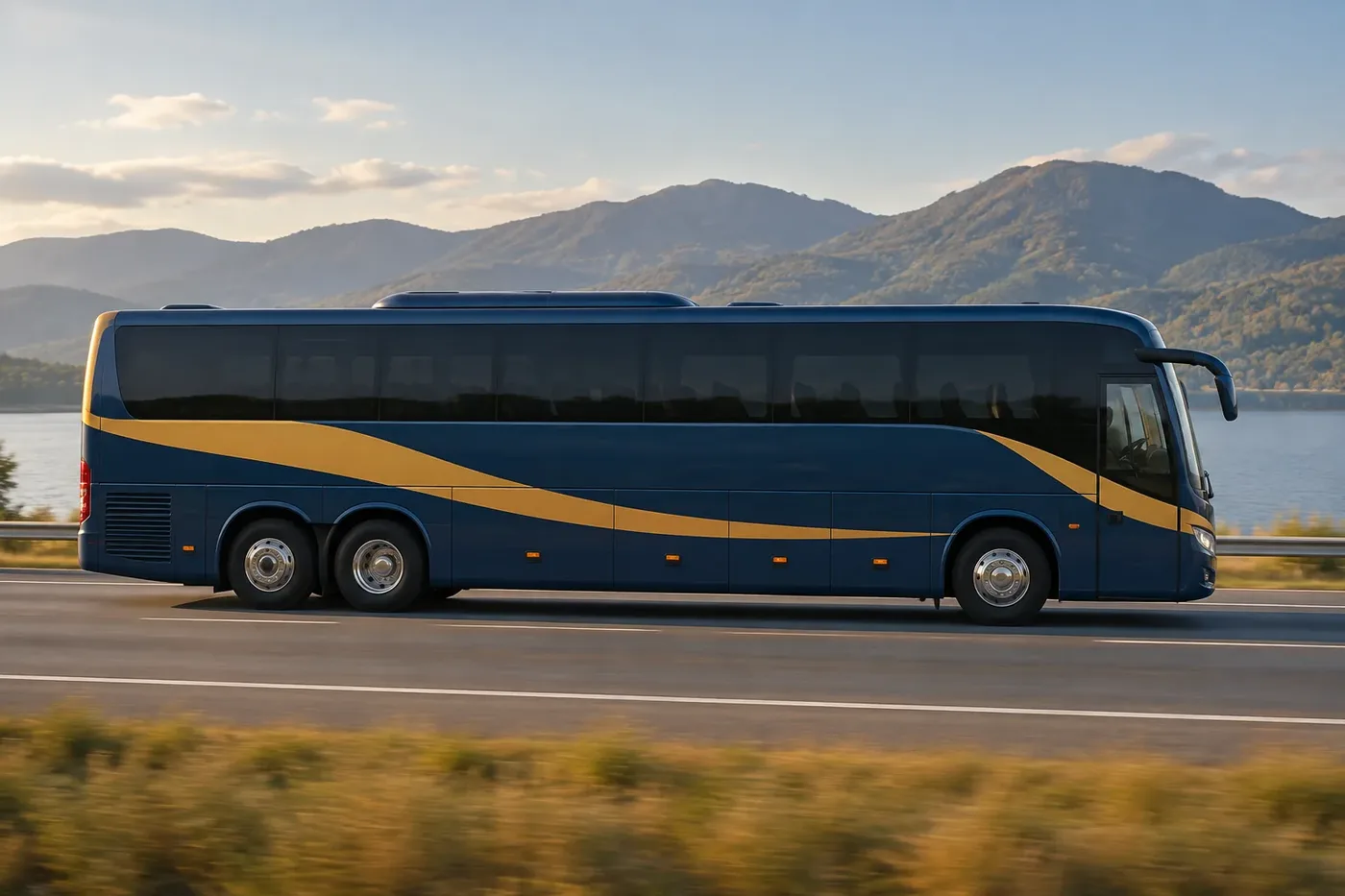
Passenger CDL Practice Test
The Passenger (P) endorsement is required to drive any commercial vehicle designed to carry 16 or more passengers, including the driver. That covers transit buses, motorcoaches, shuttles, and tour buses. Drivers seeking the School Bus (S) endorsement must also hold the P endorsement.
What's on the Passenger exam
Most states administer 20 Passenger questions and require 80% to pass. The exam covers passenger safety, vehicle inspection, loading and unloading, prohibited cargo, emergency exits, and conduct expected of a passenger-vehicle operator. A separate skills test in a representative passenger vehicle is also required.
Topics covered
- Passenger-vehicle inspection
- Loading passengers and baggage
- Carry-on baggage rules and prohibited items
- Standee line and standing passengers
- Emergency exits
- After-trip inspection (sleeping or unconscious passengers)
- Railroad crossings: stop required
- Bus driver disqualifications
- Bus brake and braking practices
- Drawbridges
Who needs this endorsement
Drivers of any vehicle designed for 16+ passengers, regardless of weight. Required for transit, charter, motorcoach, shuttle, and limousine operators above that capacity.
All 58 Passenger Practice Questions
Click any answer to reveal the correct one and the explanation. Take a state-specific 20-question round, in randomized order, on any of the state pages.
A "passenger vehicle" requiring a P endorsement is generally:
Correct. The P endorsement is required for any commercial motor vehicle designed to carry 16 or more passengers including the driver.
Which of the following is part of the bus pre-trip inspection?
Correct. Bus inspection includes all standard items plus passenger-area items: seats, emergency exits, signaling devices, kneeling/lift equipment, fire extinguisher.
The "standee line" on a bus marks:
Correct. On buses with a standee line, passengers may not stand forward of the line while the bus is moving. The line keeps standees clear of the driver and exit doors.
You may NOT carry which of the following on a passenger bus?
Correct. Buses cannot carry Class 2.3 poison gases, most Class 7 radioactive materials, tear gas, or most Class 1 explosives. Small-arms ammunition and certain emergency shipments may be allowed.
Where must hazardous materials that are allowed on a bus be carried?
Correct. When allowed at all, the small quantities of hazmat permitted on buses must be in the baggage compartment, separated from passengers.
Buses must stop at every railroad crossing:
Correct. Buses, school buses, and placarded hazmat vehicles must stop at every railroad crossing 15 to 50 feet from the nearest rail, with narrow exceptions.
When stopping at a railroad crossing, the bus must stop:
Correct. Stop 15 to 50 feet from the nearest rail. Look both ways and listen before proceeding.
When approaching a drawbridge, a bus must:
Correct. Stop at least 50 feet before any drawbridge. The exception is if there is a traffic-signal light or an attendant directing traffic, or the bridge has been closed and locked.
After every trip, the bus driver should:
Correct. Always do a post-trip walkthrough — check every seat for sleeping passengers, lost items, and damage. Many news-worthy incidents involve passengers left aboard.
A bus driver must never:
Correct. You should always enforce the standee line and prohibit standing or sitting in stairwells where they could be ejected in an emergency stop.
Carry-on baggage on a bus may be:
Correct. Carry-on must not block the aisle, the emergency exit, or the doorway. Use overhead racks or under-seat space.
A bus driver should:
Correct. Carriers may refuse boarding for safety reasons (intoxication, weapons, threatening behavior). Document and report such refusals.
A bus driver who picks up a passenger between scheduled stops:
Correct. Carrier policy and regulations govern unscheduled stops. Most companies prohibit them for safety and liability reasons.
When backing a bus, you should:
Correct. Sound the horn before backing. Use a helper to guide whenever possible — bus blind spots are large.
When you stop a bus, you should:
Correct. Smooth stops protect standing passengers and reduce surge for seated ones. Plan stops in advance.
Discharging passengers should be done:
Correct. Stop at designated stops or safe pull-offs. Never discharge into a travel lane.
A passenger vehicle drove with people standing forward of the standee line. This is:
Correct. Standees forward of the line are at risk in emergency stops or sudden braking. Enforce the line.
You discover an emergency exit that does not function. You should:
Correct. A non-functional emergency exit puts passengers at risk. The bus is out of service until repaired.
Speed control on a long downgrade in a bus is critical because:
Correct. Heavy passenger load + long downgrade = brake fade risk. Select a lower gear before starting down and use intermittent firm braking.
A bus driver who is convicted of using the bus to commit a felony or driving under the influence with passengers aboard faces:
Correct. Federal rule: certain offenses (using the CMV in a felony, DUI with passengers) bring extended or permanent disqualification.
Looking out for passengers boarding through the front door:
Correct. Use the kneeling mechanism, lift, or ramp as needed. Allow time for safe boarding.
Bus emergency exits must be:
Correct. Emergency exits must be operable, clearly identified, and never blocked by cargo or passengers.
When a passenger is disorderly:
Correct. Driver safety first: pull off safely, follow company policy, request help from authorities if the situation warrants.
Maximum passenger capacity is determined by:
Correct. Manufacturer rating + seating config = maximum allowed passengers. Standees (where allowed) are capped by the standee-line capacity.
On a bus with a wheelchair lift, you should:
Correct. Test lift operation during pre-trip; verify it stows correctly so it does not interfere with door operation or hit cars during the route.
Bus brake systems require:
Correct. Standard air-system check applies. Bus-specific: door safety interlock (door open = vehicle can't move), retarder/exhaust brake operation if equipped.
When approaching a stop where passengers will board, you should:
Correct. Plan the stop, signal, decelerate smoothly, stop at the curb, set the parking brake before opening the door — interlock should prevent door opening unless brake is set.
Stops requiring extra caution:
Correct. Anywhere with pedestrians, reduced visibility, or reduced control demands extra attention.
A bus that has been in an accident:
Correct. Post-accident inspection is required by carrier policy and federal rules. Damage to brakes, suspension, or structure may not be visible without inspection.
When carrying medical or fragile cargo with passengers (e.g., lab specimens):
Correct. Some emergency medical and lab shipments are allowed under tight conditions: small quantity, proper packaging, baggage-area storage, with carrier approval.
After accepting passengers, the driver should:
Correct. Verify safety: all seated or behind line, doors closed, brake released, then proceed.
Most bus injuries during a trip happen because of:
Correct. Standing or unbelted passengers are vulnerable to abrupt motion. Smooth driving prevents most in-bus injuries.
Driving a bus on slick roads requires:
Correct. Reduce speed, increase following distance, and treat all inputs as if a passenger is standing — they may be.
A bus driver may carry, in the baggage compartment, certain hazardous materials in small quantities except:
Correct. Strict prohibitions for buses include Class 1 explosives (other than small-arms ammunition), Division 6.1 PIH, most Class 7 radioactives, and tear gas.
A passenger bus driver who must operate over the bridge or in the tunnel:
Correct. Verify posted weight, height, and routing restrictions. Bus routes may require pre-planning to avoid prohibited corridors.
When a bus has standees, the driver should:
Correct. Standees can fall in any sudden movement. Drive smoothly to keep them safe.
When approaching a school bus that has its red flashing lights on:
Correct. When a school bus is loading or unloading children with red flashers on, all approaching vehicles (with limited exceptions for divided highways) must stop.
When you are about to leave a stop with passengers aboard, you should:
Correct. Doors closed, mirrors check, slow gentle start. Late-boarders and pedestrians are common at busy stops.
When carrying live animals (where allowed):
Correct. Service animals are required by ADA. Other animals depend on carrier policy and applicable regulations.
When fueling a bus:
Correct. Most carriers require passengers to deboard during fueling for safety. Follow company policy.
You should report any safety concerns about the bus:
Correct. Report safety issues immediately. Document with the daily driver vehicle inspection report (DVIR).
Bus drivers must check:
Correct. Pre-trip inspection — including brake condition — is required before every shift, regardless of how recently the bus was driven.
When carrying a wheelchair passenger:
Correct. Lift the passenger safely, secure the wheelchair per carrier-specified procedure (4-point tie-down typical), and use occupant restraints.
A driver may transport ___, in addition to passengers, if the carrier permits:
Correct. Many bus operators permit small express packages under company policy. The hazmat rules above still apply.
After a trip, you should leave the bus:
Correct. Sweep, check for lost items, secure the bus, and complete the post-trip inspection report.
Driver fatigue on a bus operation:
Correct. Bus operators have demanding schedules. HOS rules and carrier policy combine to manage fatigue. Sleep before driving.
Crowd control during boarding:
Correct. Boarding is a controlled process. Manage the line, watch for safe fare collection, ensure all passengers are aboard before closing the door.
On highway travel:
Correct. Smooth, predictable driving keeps passengers comfortable and safe.
When you transport passengers across state lines:
Correct. Federal interstate minimum age is 21. Drivers under 21 may operate intrastate (within their state) only.
When unloading passengers, you should:
Correct. Door interlocks usually require the parking brake set. Open after a complete stop at the curb.
When approaching a school bus on the same side of the road with red lights flashing:
Correct. Drivers (including bus drivers) approaching a school bus loading or unloading children must stop until red lights are off and the bus moves.
Passenger areas on the bus must:
Correct. Aisles and exits must remain clear during travel. Cargo or carry-on must not block these paths.
Brake retarders or "Jake" brakes on a bus:
Correct. Engine brakes / retarders help slow the rig on downgrades. Some areas regulate noise from compression brakes.
Buses transporting children on field trips:
Correct. School buses have stricter rules including the S endorsement. A motorcoach used for a field trip follows the standard P rules.
If a bus is involved in a crash and remains driveable:
Correct. Move only if needed for safety. Render aid, secure scene with warning devices, notify authorities and dispatch.
Passenger fatalities are most often caused by:
Correct. Single-vehicle rollover and head-on/angle collisions account for most passenger fatalities. Speed control and where applicable, seatbelt use, reduce risk.
A bus driver in heavy fog should:
Correct. Same fog rules as any vehicle: low beams, slow speed, gentle inputs, four-way flashers if moving slowly.
When discharging passengers in a heavy traffic area:
Correct. Always discharge to a safe pedestrian area. Never to a travel lane or unsafe shoulder.