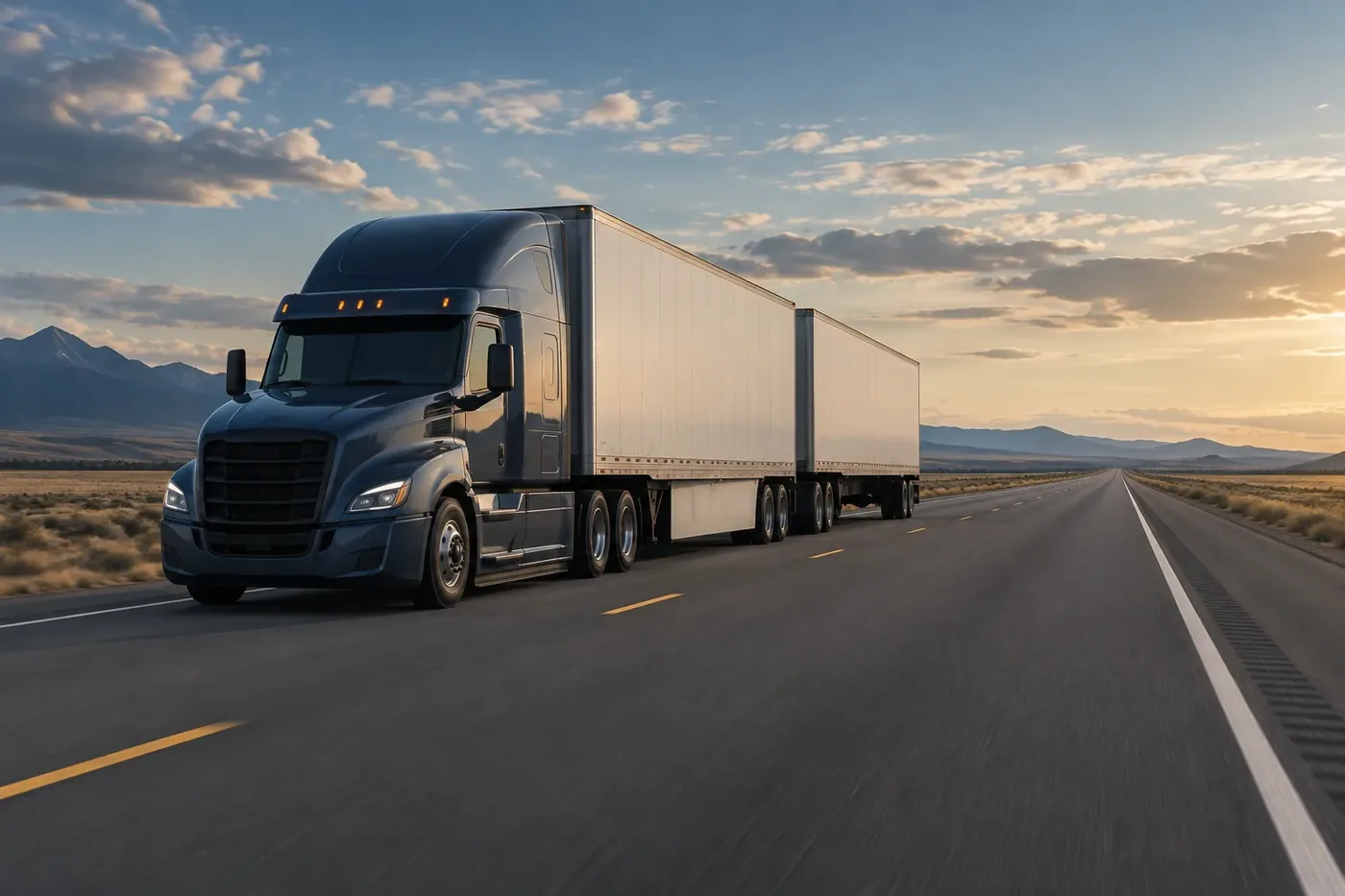
Wisconsin Doubles/Triples CDL Practice Test
This is a free 20-question practice test for the Doubles/Triples portion of the Wisconsin Commercial Driver's License knowledge exam. Questions are pulled from a pool of 50 drawn from the AAMVA CDL Manual, which is the source document the Wisconsin Division of Motor Vehicles uses to write its actual exam.
How it works: Click an answer. The correct choice highlights in green, and you'll see a short explanation. Aim for 85% or better before you sit for the real test in Wisconsin.
Question 1 of 20
Drivers should always couple the heaviest trailer:
Correct. Heaviest trailer goes directly behind the tractor; lightest goes at the rear. This minimizes rearward amplification and rollover risk.
Question 2 of 20
Safety chains on a converter dolly are required to:
Correct. Safety chains catch the dolly if the pintle hook releases or fails — preventing the trailer behind from breaking loose.
Question 3 of 20
A converter dolly is:
Correct. A converter dolly has a small frame, axle(s), and a fifth wheel mounted on top — it transforms a semi-trailer into a full trailer behind another trailer.
Question 4 of 20
A pintle hook is:
Correct. The pintle hook is the strong rear-mounted hitch that grips the dolly's lunette eye, allowing one trailer to tow another behind it.
Question 5 of 20
Crosswinds are particularly hazardous for:
Correct. Empty trailers in a multi-trailer rig present a large flat surface to crosswinds — a strong gust can blow the rear trailer over.
Question 6 of 20
Doubles and triples should not be driven:
Correct. On slippery roads, multi-trailer rigs lose stability quickly. Reduce speed substantially and increase following distance.
Question 7 of 20
A converter-dolly fifth wheel must be:
Correct. Inspect for proper lubrication, no excessive wear, and confirm the locking jaws operate correctly. The dolly fifth wheel is just as critical as the tractor's.
Question 8 of 20
A "set of doubles" typically refers to:
Correct. A "set of doubles" is one tractor pulling two trailers (typically two pups, each about 28 feet long, in LTL operations).
Question 9 of 20
A "drive-axle skid" on a doubles rig:
Correct. A drive-axle skid leads to tractor jackknife. With trailers behind, the situation gets worse fast — the rear trailers can swing wildly.
Question 10 of 20
When uncoupling the converter dolly from the lead trailer:
Correct. Standard sequence: support the trailer (landing gear if it is a semi-trailer), disconnect lines, remove chains, release pintle hook.
Question 11 of 20
When inspecting a doubles or triples rig, you should additionally check:
Correct. Every connection point and every trailer needs inspection — pintle hooks, chains, dollies, lights, brake lines, glad-hands, and air-supply valves.
Question 12 of 20
Crosswinds may cause the rear trailer of a doubles to:
Correct. Empty trailers act as sails. Strong crosswinds can sway or even tip an empty rear trailer. Reduce speed in high winds.
Question 13 of 20
When pulling triples, you should:
Correct. Stay right, plan lane changes well in advance, signal early, and avoid abrupt steering. Triples crack-the-whip violently.
Question 14 of 20
A tractor pulling doubles cannot brake as quickly as a tractor pulling a single trailer because:
Correct. Greater weight and longer air lines mean longer braking distance. Plan stopping distance with extra margin.
Question 15 of 20
Air pressure on a triple-trailer rig takes:
Correct. Each additional trailer adds line length. Brake response at the rear trailer of a triple is noticeably delayed — brake earlier.
Question 16 of 20
When testing the brakes on a doubles rig:
Correct. Test the entire rig: build-up time, leakage, low-pressure warning, parking brake, and confirm rear-trailer brake function.
Question 17 of 20
When pulling a single trailer and trying to figure out if you should add a doubles endorsement:
Correct. The T endorsement is required only when you actually operate doubles or triples. Single-trailer operations do not require it.
Question 18 of 20
A safe practice when starting from a stop with doubles:
Correct. Sudden acceleration can cause the rear trailer to sway. Start gently in low gear.
Question 19 of 20
Inspecting safety chains on a converter dolly:
Correct. Safety chains should be intact, no broken links or excessive wear, and properly crossed under the pintle for support.
Question 20 of 20
When pulling a heavy lead trailer and a light second trailer, the rig:
Correct. Heaviest in front, lightest in rear. Heavy at the rear amplifies crack-the-whip and rollover risk.
About the Wisconsin Doubles/Triples exam
Most states administer 20 Doubles/Triples questions and require 80% to pass. The exam emphasizes coupling and uncoupling the converter dolly, rearward amplification (the "crack-the-whip" effect), and the unique inspection and handling demands of multi-trailer rigs.
The Wisconsin Division of Motor Vehicles follows the federal CDL standards established by FMCSA. To earn the Doubles/Triples credential, you must answer at least 80% of the questions correctly. Many candidates score lower the first time because the test pulls from a large pool — refreshing this page will give you a different mix of questions, drawn from the same authoritative source.
Want more practice? Try the full Doubles/Triples question bank or browse all Wisconsin CDL practice tests.