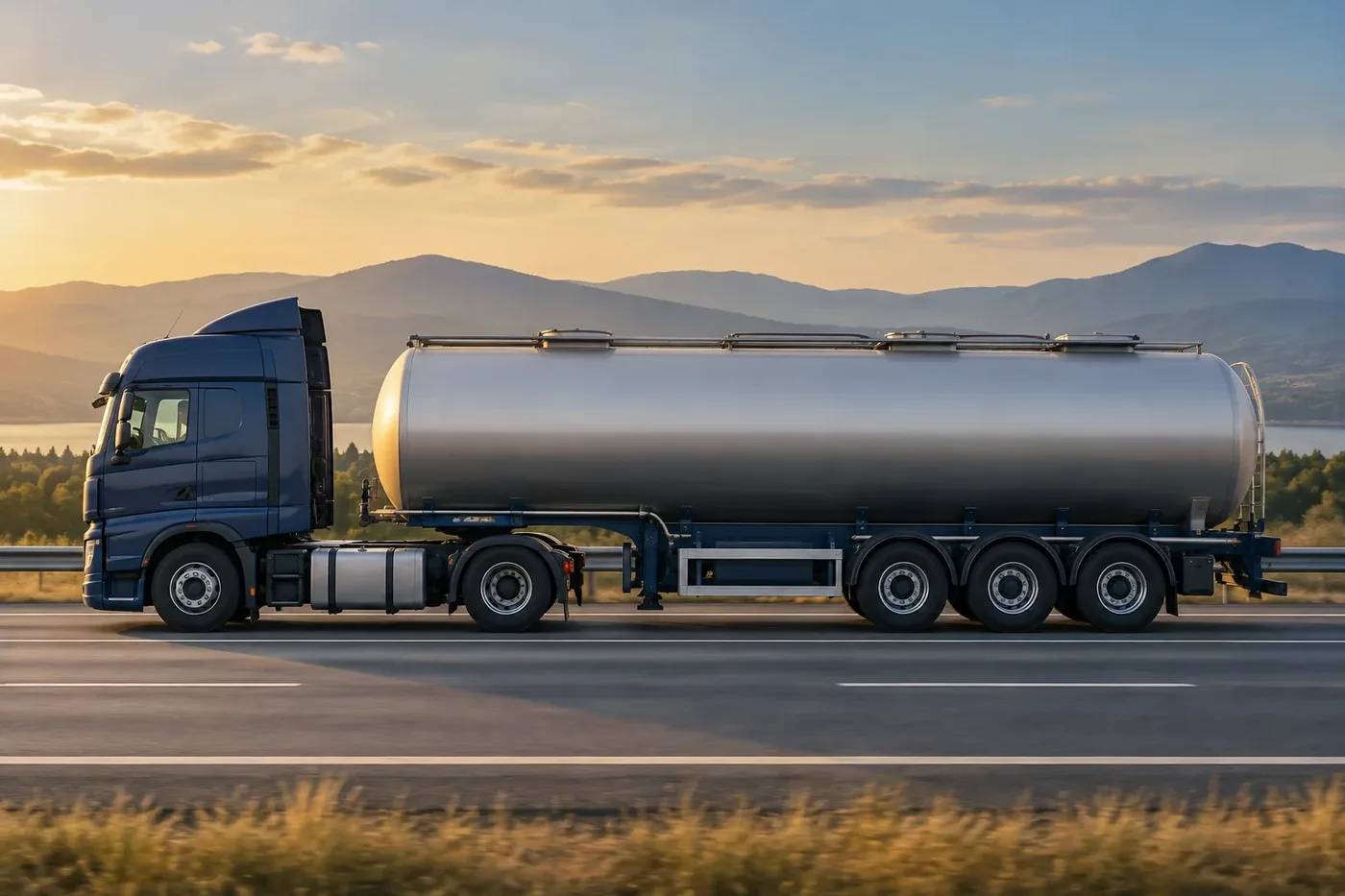
South Carolina Tanker CDL Practice Test
This is a free 20-question practice test for the Tanker portion of the South Carolina Commercial Driver's License knowledge exam. Questions are pulled from a pool of 50 drawn from the AAMVA CDL Manual, which is the source document the South Carolina Department of Motor Vehicles uses to write its actual exam.
How it works: Click an answer. The correct choice highlights in green, and you'll see a short explanation. Aim for 85% or better before you sit for the real test in South Carolina.
Question 1 of 20
A heavy liquid load with a baffled tank may still surge:
Correct. Baffles reduce front-to-back surge but do not affect side-to-side surge — bulkheads are typically transverse, not longitudinal.
Question 2 of 20
A "tank vehicle" requiring an N endorsement is generally defined as:
Correct. The N endorsement is required for any commercial vehicle hauling liquid or gas in a permanently mounted tank or portable tank with rated capacity of 1,000+ gallons (and individual tanks of 119+ gallons).
Question 3 of 20
A "baffled" tank has:
Correct. Baffled tanks have internal bulkheads with holes — they slow surge but still allow product to flow through during loading and unloading.
Question 4 of 20
The driver should plan extra time for:
Correct. A loaded tanker accelerates slower, brakes longer, and turns wider. Plan your trip and reactions accordingly.
Question 5 of 20
Front-to-back surge is most likely to cause:
Correct. Front-to-back surge pushes the rig forward when you brake — drivers have been pushed through stop lines by an unexpected forward surge.
Question 6 of 20
A "bottom-loaded" tank:
Correct. Bottom-loading uses sealed bottom-loading equipment with vapor recovery, reducing static and vapor escape compared to splash-loading from the top.
Question 7 of 20
Compartmented tanks have:
Correct. Compartmented tanks have liquid-tight bulkheads. Each compartment is loaded separately, allowing different products in one trailer.
Question 8 of 20
A loaded tanker on a curve is most likely to:
Correct. Side surge plus high CG creates a tipping moment well above what a flat-bed of equal weight produces. Speed reduction in advance is the only safe answer.
Question 9 of 20
Side-to-side surge is most likely to cause:
Correct. Side-to-side surge can amplify side-loading forces, contributing to rollover on curves and exit ramps.
Question 10 of 20
Vapor recovery during loading:
Correct. Vapor recovery captures flammable vapors displaced as product is loaded, returning them to storage. Required at most modern fuel terminals.
Question 11 of 20
A tank with multiple compartments may have:
Correct. Compartmented tanks (common on fuel-delivery trucks) carry different grades or different products. Verify the destination tank before opening any discharge valve.
Question 12 of 20
A double trailer tanker requires:
Correct. Pulling more than one tank requires Doubles/Triples (T) plus Tanker (N) endorsements. Add Hazmat (H) — together written X — for hazardous liquid loads.
Question 13 of 20
Pressure relief devices on cargo tanks are designed to:
Correct. Pressure relief valves open at a set pressure to prevent tank rupture. Tampering with them is illegal and dangerous.
Question 14 of 20
In the event of a fire on a tanker:
Correct. Pull to a safe area, away from buildings and people. Get out, call 911, and consult the ERG. Some tank fires (e.g., water on flammable liquid) make matters worse.
Question 15 of 20
Empty tankers handle:
Correct. Empty tankers have less brake traction (less weight on tires) and are more affected by crosswinds. Never assume empty equals safer.
Question 16 of 20
Tankers have a high center of gravity because:
Correct. A tank carries its load high above the road. The center of gravity is much higher than for a flatbed of the same weight, increasing rollover risk.
Question 17 of 20
When braking a partially filled smooth-bore tank, you should:
Correct. In smooth-bore tanks, surge is severe. Brake gently and earlier than you would in a dry-van trailer to avoid being pushed forward.
Question 18 of 20
When backing a tanker, you should:
Correct. Tankers can have unusual mirror angles and rear visibility. Use a helper, move slowly, and watch for tank-mount lights and overhead clearance.
Question 19 of 20
When unloading product from a cargo tank, you should:
Correct. Pre-check receiving container, bond and ground, control flow rate to prevent splash and spill, and remain attentive for flammable liquids.
Question 20 of 20
When you stop a placarded tanker carrying flammable liquid at a railroad crossing, you must stop:
Correct. Placarded hazmat (which most fuel tankers are) must stop 15 to 50 feet from the nearest rail. Look, listen, and cross only when clear.
About the South Carolina Tanker exam
Most states administer 20 Tanker questions and require 80% to pass. Topics include the unique handling of liquid loads, surge effects, baffles vs. smooth-bore, outage and expansion, inspection of the cargo tank, and emergency procedures.
The South Carolina Department of Motor Vehicles follows the federal CDL standards established by FMCSA. To earn the Tanker credential, you must answer at least 80% of the questions correctly. Many candidates score lower the first time because the test pulls from a large pool — refreshing this page will give you a different mix of questions, drawn from the same authoritative source.
Want more practice? Try the full Tanker question bank or browse all South Carolina CDL practice tests.