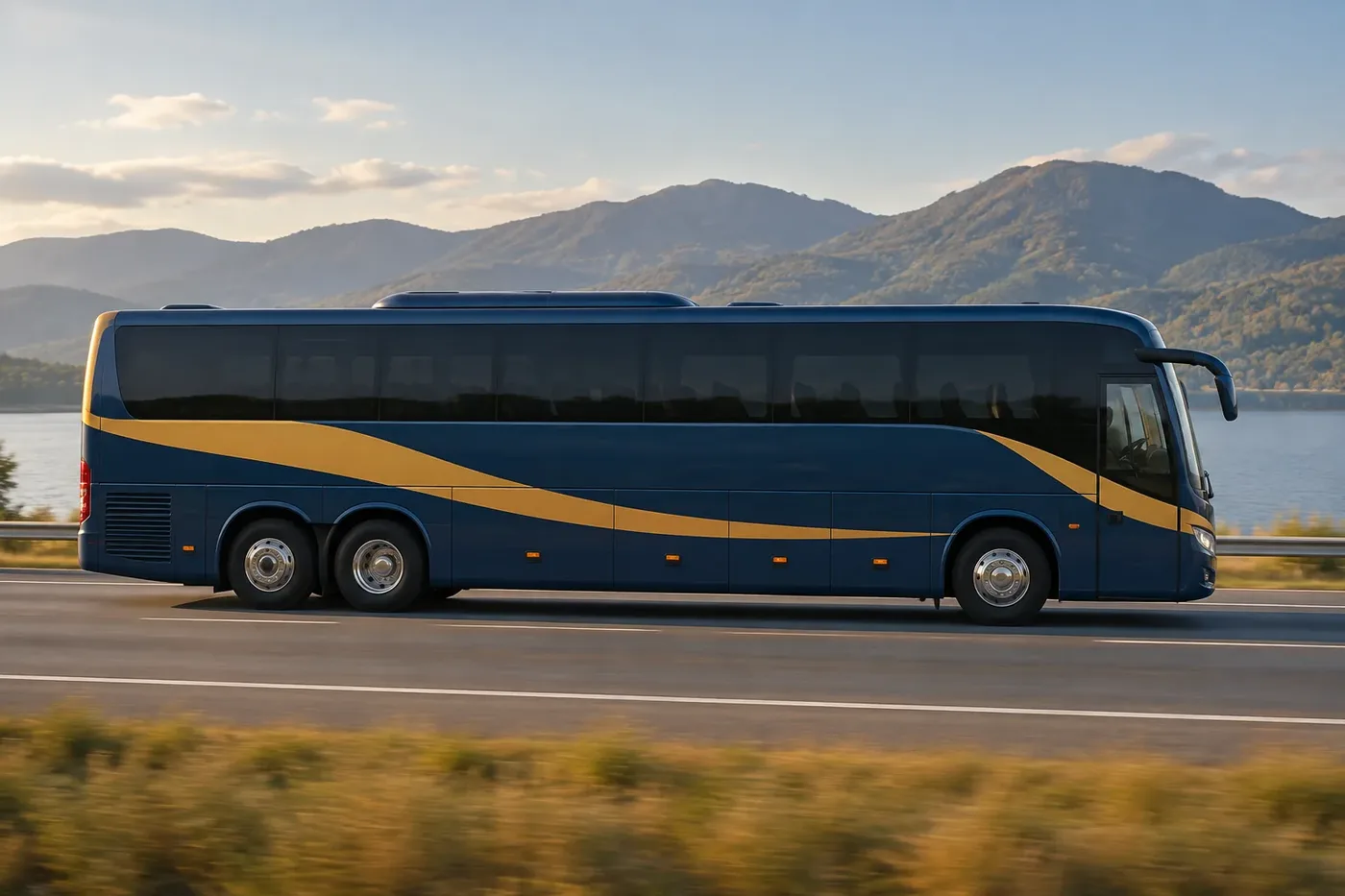
Rhode Island Passenger CDL Practice Test
This is a free 20-question practice test for the Passenger portion of the Rhode Island Commercial Driver's License knowledge exam. Questions are pulled from a pool of 58 drawn from the AAMVA CDL Manual, which is the source document the Rhode Island Division of Motor Vehicles uses to write its actual exam.
How it works: Click an answer. The correct choice highlights in green, and you'll see a short explanation. Aim for 85% or better before you sit for the real test in Rhode Island.
Question 1 of 20
When you stop a bus, you should:
Correct. Smooth stops protect standing passengers and reduce surge for seated ones. Plan stops in advance.
Question 2 of 20
When carrying a wheelchair passenger:
Correct. Lift the passenger safely, secure the wheelchair per carrier-specified procedure (4-point tie-down typical), and use occupant restraints.
Question 3 of 20
Bus brake systems require:
Correct. Standard air-system check applies. Bus-specific: door safety interlock (door open = vehicle can't move), retarder/exhaust brake operation if equipped.
Question 4 of 20
Crowd control during boarding:
Correct. Boarding is a controlled process. Manage the line, watch for safe fare collection, ensure all passengers are aboard before closing the door.
Question 5 of 20
You may NOT carry which of the following on a passenger bus?
Correct. Buses cannot carry Class 2.3 poison gases, most Class 7 radioactive materials, tear gas, or most Class 1 explosives. Small-arms ammunition and certain emergency shipments may be allowed.
Question 6 of 20
Speed control on a long downgrade in a bus is critical because:
Correct. Heavy passenger load + long downgrade = brake fade risk. Select a lower gear before starting down and use intermittent firm braking.
Question 7 of 20
Where must hazardous materials that are allowed on a bus be carried?
Correct. When allowed at all, the small quantities of hazmat permitted on buses must be in the baggage compartment, separated from passengers.
Question 8 of 20
Buses must stop at every railroad crossing:
Correct. Buses, school buses, and placarded hazmat vehicles must stop at every railroad crossing 15 to 50 feet from the nearest rail, with narrow exceptions.
Question 9 of 20
A bus driver must never:
Correct. You should always enforce the standee line and prohibit standing or sitting in stairwells where they could be ejected in an emergency stop.
Question 10 of 20
A passenger vehicle drove with people standing forward of the standee line. This is:
Correct. Standees forward of the line are at risk in emergency stops or sudden braking. Enforce the line.
Question 11 of 20
Maximum passenger capacity is determined by:
Correct. Manufacturer rating + seating config = maximum allowed passengers. Standees (where allowed) are capped by the standee-line capacity.
Question 12 of 20
When a bus has standees, the driver should:
Correct. Standees can fall in any sudden movement. Drive smoothly to keep them safe.
Question 13 of 20
On highway travel:
Correct. Smooth, predictable driving keeps passengers comfortable and safe.
Question 14 of 20
When a passenger is disorderly:
Correct. Driver safety first: pull off safely, follow company policy, request help from authorities if the situation warrants.
Question 15 of 20
Stops requiring extra caution:
Correct. Anywhere with pedestrians, reduced visibility, or reduced control demands extra attention.
Question 16 of 20
After accepting passengers, the driver should:
Correct. Verify safety: all seated or behind line, doors closed, brake released, then proceed.
Question 17 of 20
Brake retarders or "Jake" brakes on a bus:
Correct. Engine brakes / retarders help slow the rig on downgrades. Some areas regulate noise from compression brakes.
Question 18 of 20
When unloading passengers, you should:
Correct. Door interlocks usually require the parking brake set. Open after a complete stop at the curb.
Question 19 of 20
When discharging passengers in a heavy traffic area:
Correct. Always discharge to a safe pedestrian area. Never to a travel lane or unsafe shoulder.
Question 20 of 20
A "passenger vehicle" requiring a P endorsement is generally:
Correct. The P endorsement is required for any commercial motor vehicle designed to carry 16 or more passengers including the driver.
About the Rhode Island Passenger exam
Most states administer 20 Passenger questions and require 80% to pass. The exam covers passenger safety, vehicle inspection, loading and unloading, prohibited cargo, emergency exits, and conduct expected of a passenger-vehicle operator. A separate skills test in a representative passenger vehicle is also required.
The Rhode Island Division of Motor Vehicles follows the federal CDL standards established by FMCSA. To earn the Passenger credential, you must answer at least 80% of the questions correctly. Many candidates score lower the first time because the test pulls from a large pool — refreshing this page will give you a different mix of questions, drawn from the same authoritative source.
Want more practice? Try the full Passenger question bank or browse all Rhode Island CDL practice tests.