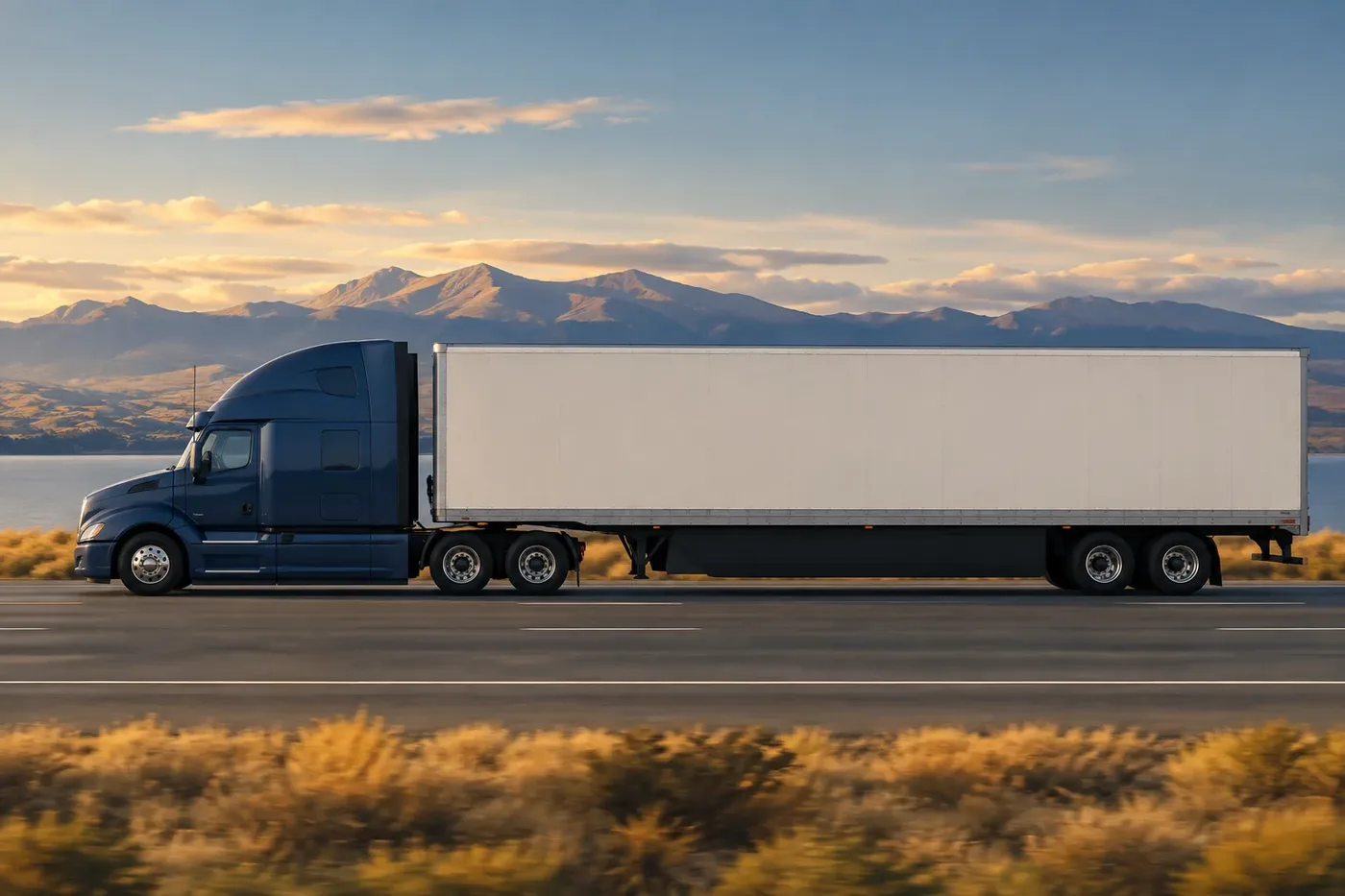
New Mexico Combination Vehicles CDL Practice Test
This is a free 20-question practice test for the Combination Vehicles portion of the New Mexico Commercial Driver's License knowledge exam. Questions are pulled from a pool of 55 drawn from the AAMVA CDL Manual, which is the source document the New Mexico Motor Vehicle Division uses to write its actual exam.
How it works: Click an answer. The correct choice highlights in green, and you'll see a short explanation. Aim for 85% or better before you sit for the real test in New Mexico.
Question 1 of 20
Your trailer ABS warning lamp is on. The trailer service brakes:
Correct. Trailer service brakes still work normally without ABS. Have the system repaired; ABS gives extra control during emergency braking.
Question 2 of 20
A loaded trailer "bows" (sways) at speed because:
Correct. Crosswinds and uneven loading can produce trailer sway. Slow down and allow the sway to dampen; do not over-correct with steering.
Question 3 of 20
On a slippery surface, drive in:
Correct. Reduce engine power to drive wheels (higher gear, gentler accelerator) and brake earlier and gentler to avoid wheel spin or skid.
Question 4 of 20
A safe practice when arriving at a destination is to:
Correct. Slow approach with mirror checks gives time to identify clearance issues and pedestrians.
Question 5 of 20
When you couple, the locking jaws of the fifth wheel must close around:
Correct. The locking jaws must engage the kingpin shank below the head. If the jaws close above the head, the connection is unsafe.
Question 6 of 20
Cargo securement: the heaviest part of the load should be:
Correct. Loading heavy cargo to the front of the trailer over the drive axles helps with traction; loading to one side or top creates dangerous handling.
Question 7 of 20
The air lines connecting the tractor and trailer are:
Correct. The red glad-hand carries emergency/supply air; the blue glad-hand carries service air. They cross to keep matched colors when coupling.
Question 8 of 20
If the trailer is too low for coupling, you should:
Correct. Use the landing gear hand crank to raise the trailer to the proper height (just below fifth-wheel level) before backing under.
Question 9 of 20
Maximum allowable trailer-brake leakage rate (engine off, brakes released, combination vehicle) is:
Correct. Combination vehicles: no more than 3 psi/min with brakes released, 4 psi/min with brakes applied.
Question 10 of 20
Before uncoupling, you should:
Correct. Proper sequence: park level, lower landing gear to support the trailer, disconnect lines, release jaws, then pull forward slowly. Skipping any step risks dropping the trailer.
Question 11 of 20
Trailer rollover is more likely when:
Correct. High cargo and uneven side-loading raise the center of gravity, increasing rollover risk on curves and ramps.
Question 12 of 20
The "rearward amplification" effect:
Correct. Rearward amplification — the crack-the-whip effect — is most severe in the rear trailer of a multi-trailer combination.
Question 13 of 20
To recover from a trailer skid, you should:
Correct. Release the brakes so the trailer wheels can rotate again and re-establish traction. Continued braking will worsen the skid.
Question 14 of 20
Length and weight increase what about a combination vehicle?
Correct. Longer, heavier rigs need more stopping distance, swing wider in turns, have larger blind spots, and require more time and space to change lanes.
Question 15 of 20
When you connect the glad-hands, you should:
Correct. Push the glad-hands together so the rubber seals match, then rotate to lock. Be sure red goes to red and blue goes to blue (the lines themselves often cross to keep colors matched).
Question 16 of 20
Combination vehicles are usually:
Correct. Combination vehicles (tractor-trailer rigs) are heavier, longer, and articulate at the fifth wheel — all making them more demanding than single-unit trucks.
Question 17 of 20
When inspecting the kingpin during pre-trip, look for:
Correct. A worn, cracked, or bent kingpin can fail under load. The locking jaws must close completely around the shank, not just the head.
Question 18 of 20
Trailer cargo can shift if:
Correct. Inadequate securement, uneven packing, hard braking, sharp turns, or rough roads can all shift cargo. Inspect cargo periodically en route.
Question 19 of 20
When uncoupling, you should lower the landing gear:
Correct. Lower the landing gear and snug it against the ground before releasing the fifth-wheel jaws so the trailer doesn't drop when you pull away.
Question 20 of 20
Auxiliary equipment (refrigeration, hydraulic lift gates) on the trailer:
Correct. Reefer units, lift gates, and other auxiliary equipment add weight and may shift CG. Inspect securement and check operation in pre-trip.
About the New Mexico Combination Vehicles exam
Most states administer 20 Combination Vehicles questions and require 80% to pass. The exam emphasizes the unique handling of articulated vehicles: how trailers track behind the tractor, how to prevent rollover, how to manage rearward amplification with multi-trailer combinations, and the correct sequence to couple and uncouple.
The New Mexico Motor Vehicle Division follows the federal CDL standards established by FMCSA. To earn the Combination Vehicles credential, you must answer at least 80% of the questions correctly. Many candidates score lower the first time because the test pulls from a large pool — refreshing this page will give you a different mix of questions, drawn from the same authoritative source.
Want more practice? Try the full Combination Vehicles question bank or browse all New Mexico CDL practice tests.