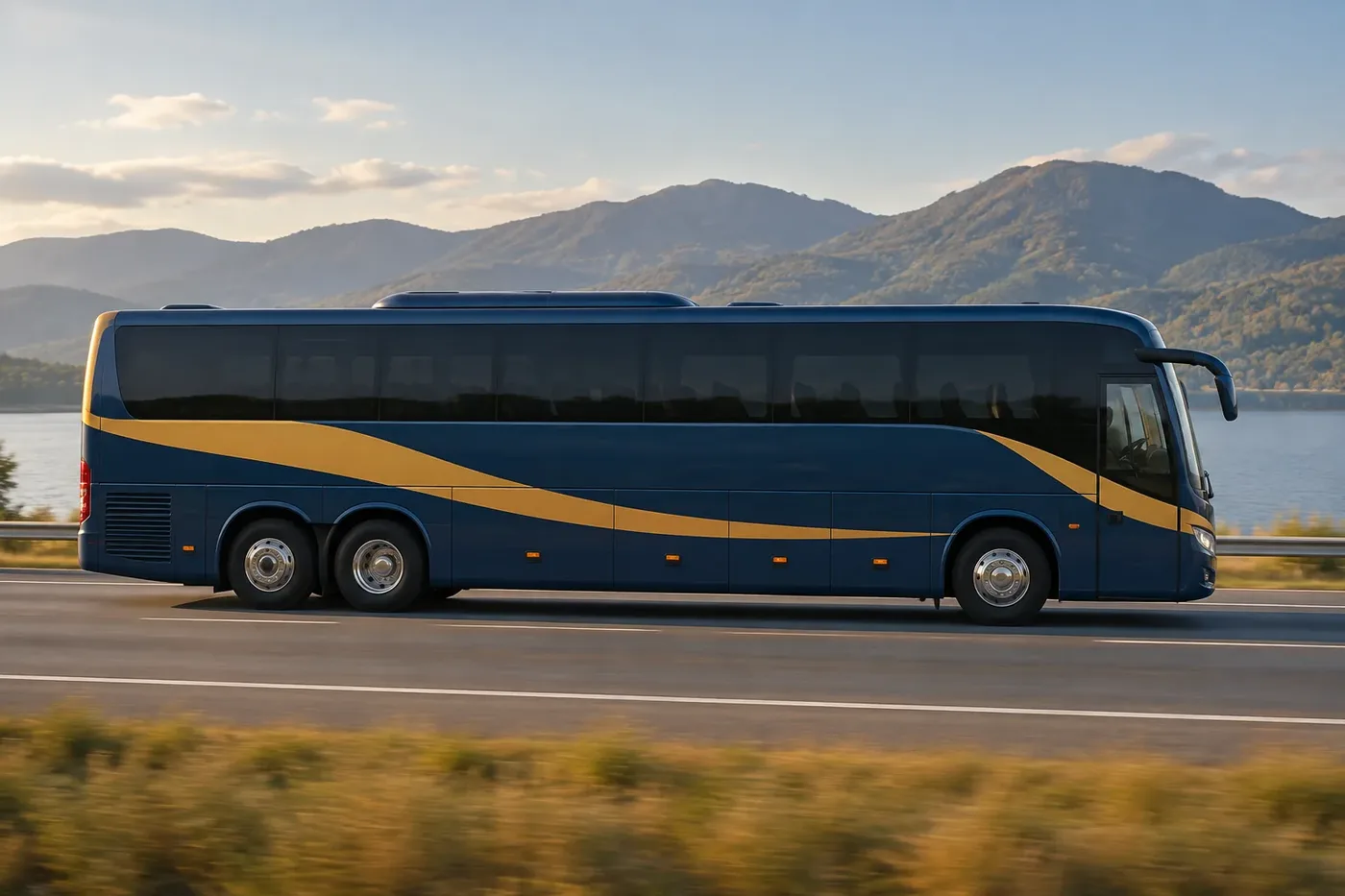
Massachusetts Passenger CDL Practice Test
This is a free 20-question practice test for the Passenger portion of the Massachusetts Commercial Driver's License knowledge exam. Questions are pulled from a pool of 58 drawn from the AAMVA CDL Manual, which is the source document the Massachusetts Registry of Motor Vehicles uses to write its actual exam.
How it works: Click an answer. The correct choice highlights in green, and you'll see a short explanation. Aim for 85% or better before you sit for the real test in Massachusetts.
Question 1 of 20
You discover an emergency exit that does not function. You should:
Correct. A non-functional emergency exit puts passengers at risk. The bus is out of service until repaired.
Question 2 of 20
When backing a bus, you should:
Correct. Sound the horn before backing. Use a helper to guide whenever possible — bus blind spots are large.
Question 3 of 20
A bus driver who is convicted of using the bus to commit a felony or driving under the influence with passengers aboard faces:
Correct. Federal rule: certain offenses (using the CMV in a felony, DUI with passengers) bring extended or permanent disqualification.
Question 4 of 20
Bus emergency exits must be:
Correct. Emergency exits must be operable, clearly identified, and never blocked by cargo or passengers.
Question 5 of 20
Bus drivers must check:
Correct. Pre-trip inspection — including brake condition — is required before every shift, regardless of how recently the bus was driven.
Question 6 of 20
When you are about to leave a stop with passengers aboard, you should:
Correct. Doors closed, mirrors check, slow gentle start. Late-boarders and pedestrians are common at busy stops.
Question 7 of 20
Discharging passengers should be done:
Correct. Stop at designated stops or safe pull-offs. Never discharge into a travel lane.
Question 8 of 20
On a bus with a wheelchair lift, you should:
Correct. Test lift operation during pre-trip; verify it stows correctly so it does not interfere with door operation or hit cars during the route.
Question 9 of 20
When approaching a drawbridge, a bus must:
Correct. Stop at least 50 feet before any drawbridge. The exception is if there is a traffic-signal light or an attendant directing traffic, or the bridge has been closed and locked.
Question 10 of 20
Maximum passenger capacity is determined by:
Correct. Manufacturer rating + seating config = maximum allowed passengers. Standees (where allowed) are capped by the standee-line capacity.
Question 11 of 20
Bus brake systems require:
Correct. Standard air-system check applies. Bus-specific: door safety interlock (door open = vehicle can't move), retarder/exhaust brake operation if equipped.
Question 12 of 20
When you stop a bus, you should:
Correct. Smooth stops protect standing passengers and reduce surge for seated ones. Plan stops in advance.
Question 13 of 20
When approaching a stop where passengers will board, you should:
Correct. Plan the stop, signal, decelerate smoothly, stop at the curb, set the parking brake before opening the door — interlock should prevent door opening unless brake is set.
Question 14 of 20
Which of the following is part of the bus pre-trip inspection?
Correct. Bus inspection includes all standard items plus passenger-area items: seats, emergency exits, signaling devices, kneeling/lift equipment, fire extinguisher.
Question 15 of 20
You may NOT carry which of the following on a passenger bus?
Correct. Buses cannot carry Class 2.3 poison gases, most Class 7 radioactive materials, tear gas, or most Class 1 explosives. Small-arms ammunition and certain emergency shipments may be allowed.
Question 16 of 20
Stops requiring extra caution:
Correct. Anywhere with pedestrians, reduced visibility, or reduced control demands extra attention.
Question 17 of 20
After a trip, you should leave the bus:
Correct. Sweep, check for lost items, secure the bus, and complete the post-trip inspection report.
Question 18 of 20
When carrying live animals (where allowed):
Correct. Service animals are required by ADA. Other animals depend on carrier policy and applicable regulations.
Question 19 of 20
Speed control on a long downgrade in a bus is critical because:
Correct. Heavy passenger load + long downgrade = brake fade risk. Select a lower gear before starting down and use intermittent firm braking.
Question 20 of 20
Buses must stop at every railroad crossing:
Correct. Buses, school buses, and placarded hazmat vehicles must stop at every railroad crossing 15 to 50 feet from the nearest rail, with narrow exceptions.
About the Massachusetts Passenger exam
Most states administer 20 Passenger questions and require 80% to pass. The exam covers passenger safety, vehicle inspection, loading and unloading, prohibited cargo, emergency exits, and conduct expected of a passenger-vehicle operator. A separate skills test in a representative passenger vehicle is also required.
The Massachusetts Registry of Motor Vehicles follows the federal CDL standards established by FMCSA. To earn the Passenger credential, you must answer at least 80% of the questions correctly. Many candidates score lower the first time because the test pulls from a large pool — refreshing this page will give you a different mix of questions, drawn from the same authoritative source.
Want more practice? Try the full Passenger question bank or browse all Massachusetts CDL practice tests.