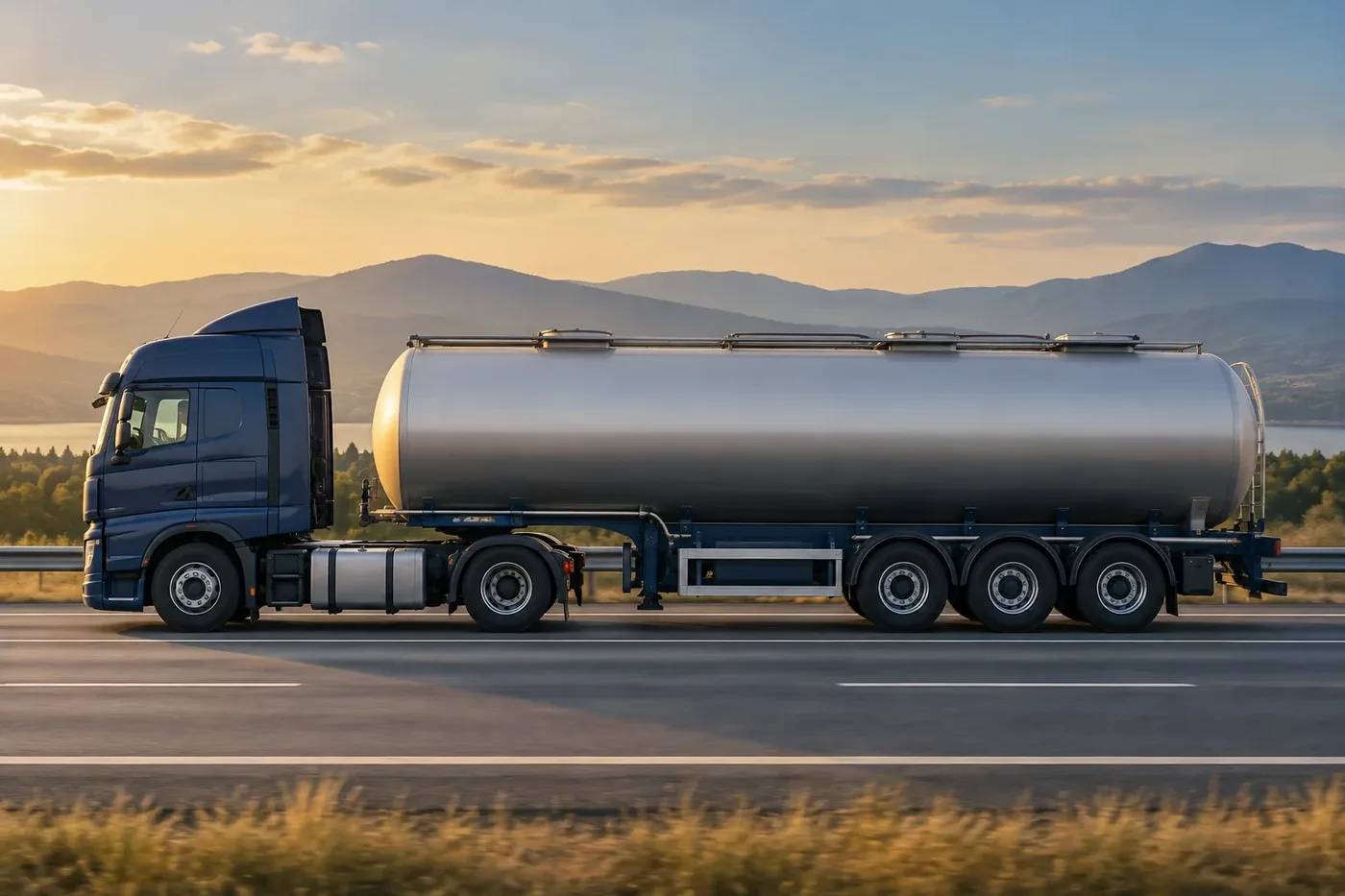
Georgia Tanker CDL Practice Test
This is a free 20-question practice test for the Tanker portion of the Georgia Commercial Driver's License knowledge exam. Questions are pulled from a pool of 50 drawn from the AAMVA CDL Manual, which is the source document the Georgia Department of Driver Services uses to write its actual exam.
How it works: Click an answer. The correct choice highlights in green, and you'll see a short explanation. Aim for 85% or better before you sit for the real test in Georgia.
Question 1 of 20
Liquid in a partially filled tank causes:
Correct. Surge is the side-to-side or front-to-back movement of liquid in a partially filled tank — it can throw the rig forward, pull it sideways, and significantly affect handling.
Question 2 of 20
A tanker with a high center of gravity is most prone to rollover during:
Correct. High center of gravity makes tankers roll on tight curves, sudden lane changes, and exit ramps. Slow well in advance.
Question 3 of 20
A loaded tanker on a curve is most likely to:
Correct. Side surge plus high CG creates a tipping moment well above what a flat-bed of equal weight produces. Speed reduction in advance is the only safe answer.
Question 4 of 20
On a wet road, a tanker should:
Correct. On wet pavement, reduce speed by about one-third. On snow, by about one-half. Tankers are less forgiving than dry vans on slippery roads.
Question 5 of 20
Compartmented tanks have:
Correct. Compartmented tanks have liquid-tight bulkheads. Each compartment is loaded separately, allowing different products in one trailer.
Question 6 of 20
In the event of a fire on a tanker:
Correct. Pull to a safe area, away from buildings and people. Get out, call 911, and consult the ERG. Some tank fires (e.g., water on flammable liquid) make matters worse.
Question 7 of 20
Side-to-side surge is most likely to cause:
Correct. Side-to-side surge can amplify side-loading forces, contributing to rollover on curves and exit ramps.
Question 8 of 20
When loading a cargo tank with flammable liquid, the driver must:
Correct. Federal rule: driver remains within 25 feet, alert, with a clear view, ready to act in case of overflow or emergency.
Question 9 of 20
A "bottom-loaded" tank:
Correct. Bottom-loading uses sealed bottom-loading equipment with vapor recovery, reducing static and vapor escape compared to splash-loading from the top.
Question 10 of 20
You should never load a tank completely full because:
Correct. Liquids expand with temperature. Without outage, a warming load can over-pressurize and rupture the tank.
Question 11 of 20
When driving a tanker, you should:
Correct. Posted advisory speeds assume cars. A loaded tanker may roll over at the posted speed — slow well below posted speeds for ramps and curves.
Question 12 of 20
Tanker pre-trip should specifically check:
Correct. In addition to standard pre-trip, inspect the tank shell, all valves, manhole covers, vents, and pressure-relief devices.
Question 13 of 20
Outage refers to:
Correct. Outage is the empty space left at the top of a tank to allow liquid to expand as it warms. Different liquids require different outage percentages.
Question 14 of 20
When the surge in a tanker pushes the rig forward at a stop, you may:
Correct. Forward surge can push the entire rig forward — past stop lines, into intersections, into the vehicle ahead. Plan your stops with extra distance.
Question 15 of 20
Tank vehicles should not be driven:
Correct. On long downgrades, select a low gear before starting down and use firm intermittent brake applications to prevent fade.
Question 16 of 20
Tankers should be driven with:
Correct. Tankers stop slower and roll easier. Increase following distance and use gentler steering and braking inputs.
Question 17 of 20
Bonding and grounding during product transfer:
Correct. Static electricity builds up during liquid transfer. Bonding (cable between tank and receiving container) plus grounding equalizes potential to prevent ignition.
Question 18 of 20
Empty tankers handle:
Correct. Empty tankers have less brake traction (less weight on tires) and are more affected by crosswinds. Never assume empty equals safer.
Question 19 of 20
When you discover a leak in a cargo tank carrying flammable liquid:
Correct. A leaking flammable cargo tank is a major incident — secure the area, evacuate per the ERG, contact emergency services. Never attempt roadside cargo transfer.
Question 20 of 20
When unloading from a top-mounted hatch, you should:
Correct. Top-mount work involves fall hazard. Use the ladder safely, follow fall-protection procedures, and secure hatches after.
About the Georgia Tanker exam
Most states administer 20 Tanker questions and require 80% to pass. Topics include the unique handling of liquid loads, surge effects, baffles vs. smooth-bore, outage and expansion, inspection of the cargo tank, and emergency procedures.
The Georgia Department of Driver Services follows the federal CDL standards established by FMCSA. To earn the Tanker credential, you must answer at least 80% of the questions correctly. Many candidates score lower the first time because the test pulls from a large pool — refreshing this page will give you a different mix of questions, drawn from the same authoritative source.
Want more practice? Try the full Tanker question bank or browse all Georgia CDL practice tests.