Tanker Study Guide
This study guide condenses the AAMVA CDL Manual chapter on Tanker into the concepts that show up most often on the knowledge exam. Read it through once, take the practice test, then come back to anything you missed.
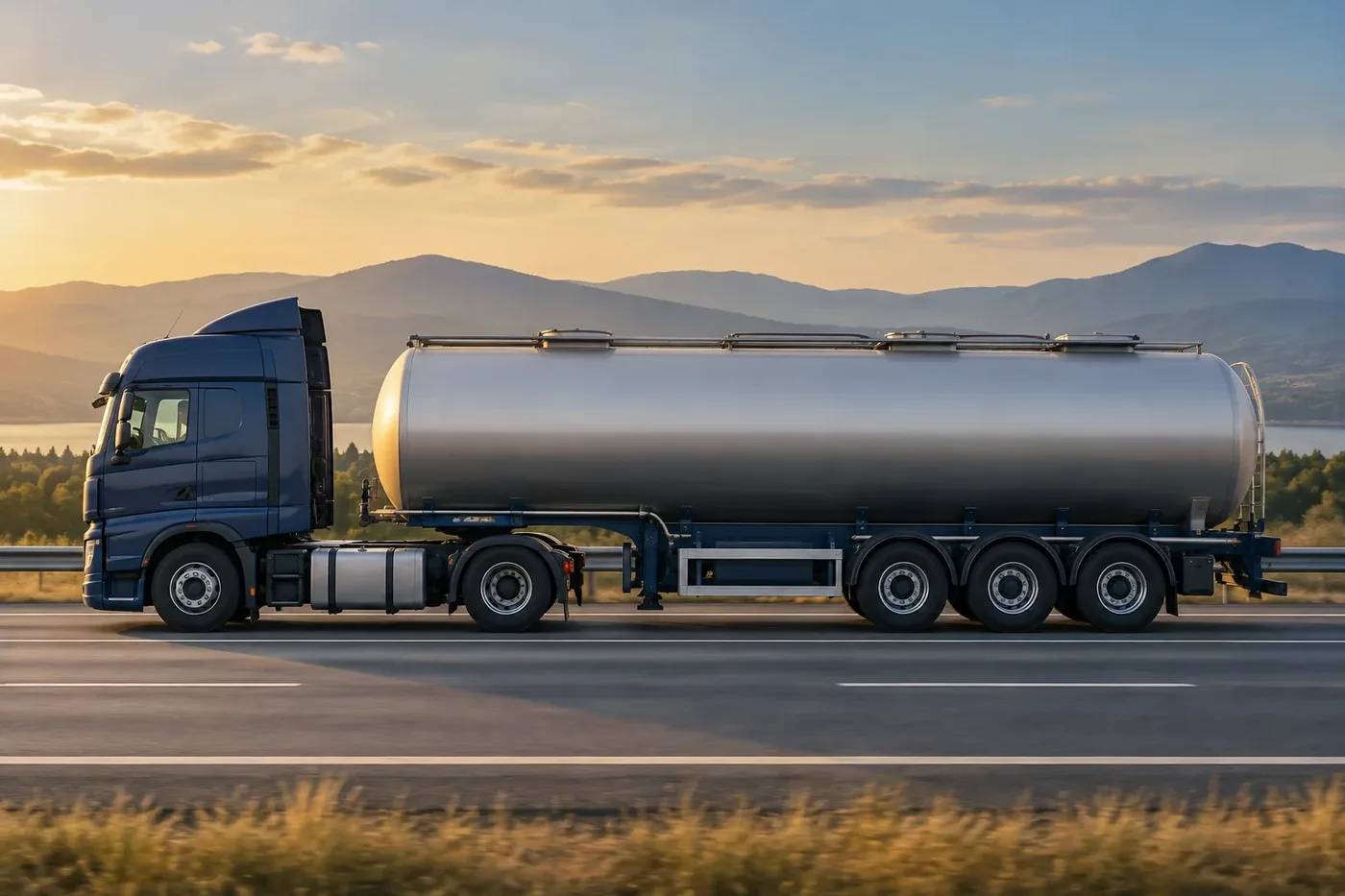
Why tankers handle differently
Liquids in a tank slosh; even small movements of the rig create significant force shifts inside the tank. A partially filled tank can surge forward when you brake, pushing the tractor forward — drivers have been pushed through stop-line intersections by the surge of a lightly loaded liquid. Always brake earlier and gentler than you would in a dry-van trailer.
Outage and expansion
Liquids expand as they warm. You must leave outage — empty space at the top of the tank — to allow for expansion. Different liquids expand at different rates, so the required outage varies by product. Never load a tank completely full for any liquid except for products that explicitly do not require outage; check the shipping paper.
Smooth bore vs. baffled tanks
A baffled tank has internal bulkheads with holes that let liquid flow through but slow surge. A smooth-bore tank has no internal divisions; it is the easiest to clean (used for milk, food-grade products) but the surge is dramatic. With a smooth-bore tank, brake gently and start braking earlier — a sudden stop can throw you forward when the load surges.
High center of gravity
Tankers, especially when carrying heavy liquids, have a high center of gravity. They roll over at speeds well below those that would tip a dry-van trailer. Slow before curves and exit ramps — many tanker rollovers happen at posted "car" exit-ramp speeds. Travel in the center of your lane to avoid running off the road on a side slope.
Inspecting a tanker
In addition to the standard pre-trip, check the tank shell for leaks, dents, and cracks. Inspect intake, discharge, and cut-off valves. Verify pipes and hoses are secure. Check the manhole covers and venting devices. For pressurized tanks, check pressure relief devices.
How to use this guide before your exam
Read each section carefully and try to put the rule in your own words before moving on. The CDL knowledge exam tests recognition more than recall — you'll see the right answer in front of you and have to pick it from distractors that all sound plausible. The way to defeat distractors is to know the underlying rule cold.
Once you can read this guide and answer "what's the rule?" without checking, return to the full practice test. If you score 85% or higher across two consecutive runs, you are ready to schedule the official knowledge test at your DMV.