School Bus Study Guide
This study guide condenses the AAMVA CDL Manual chapter on School Bus into the concepts that show up most often on the knowledge exam. Read it through once, take the practice test, then come back to anything you missed.
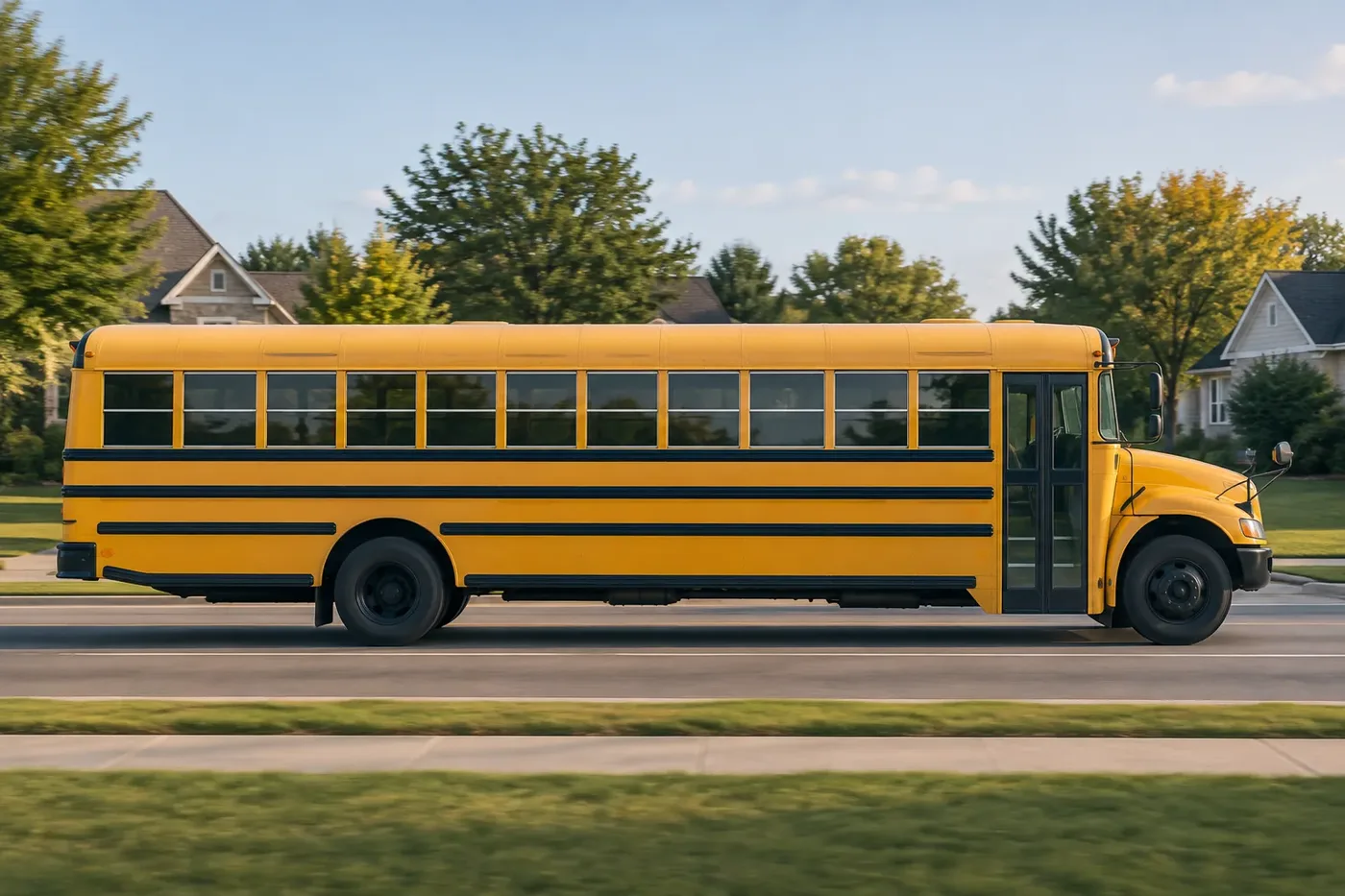
The danger zone
The danger zone is the area on all sides of the bus where children are in the most danger of being hit. It extends 10 feet in front of the bus, 10 feet on each side, and 10 feet behind, plus any additional area required for the bus to maneuver. Most students struck by their own school bus are in the danger zone — usually right after being unloaded. Always do a complete mirror sweep and a pause-and-count before moving.
Loading and unloading
Approach the stop slowly, activate the alternating amber warning lights about 200 feet in advance (longer in 50+ mph zones), come to a stop with the front bumper at least 10 feet from waiting students, set the parking brake, place the transmission in neutral, activate the red flashing lights and extend the stop arm, count the students who are getting on or off, watch your mirrors for anyone returning to the bus or running, count again before moving, deactivate the lights and stop arm, then proceed.
Crossing students
When students must cross the road in front of the bus to reach the stop or after exiting, instruct them to walk in front of the bus at least 10 feet ahead so you can see them, look both ways, and cross only when you signal. Never start moving until every student is across, accounted for, and seated or clear.
Railroad crossings
A school bus must stop at every railroad crossing, between 15 and 50 feet from the nearest rail. Open the entrance door and the driver's window. Listen for an approaching train. Look both ways. Close the door, place the bus in a low gear, and cross without shifting. Never accept the assurance of any other vehicle that the way is clear — make your own observation.
Backing
Avoid backing a school bus whenever possible. If you must back, station a responsible adult at the rear to guide you, do not allow students to be loaded or unloaded while backing, sound the horn before moving, and back slowly. Never back across a roadway.
Emergency evacuation
Plan two evacuation routes: front door and rear emergency exit. Evacuate when fire is on or in the bus, the bus is in danger of fire (downed power lines, fuel spill), the bus is on or near railroad tracks, the bus is in the path of a train, the bus is in danger of being hit. Evacuate students to a safe area at least 100 feet off the roadway in the direction of oncoming traffic.
How to use this guide before your exam
Read each section carefully and try to put the rule in your own words before moving on. The CDL knowledge exam tests recognition more than recall — you'll see the right answer in front of you and have to pick it from distractors that all sound plausible. The way to defeat distractors is to know the underlying rule cold.
Once you can read this guide and answer "what's the rule?" without checking, return to the full practice test. If you score 85% or higher across two consecutive runs, you are ready to schedule the official knowledge test at your DMV.